Showing posts with label Maths News. Show all posts

Tuesday, 28 July 2015

What is Summer Learning Loss?


Summer is an ideal time for students of all ages to strengthen their academic skills while still having plenty of time left over for summer activities.

When the school doors close for the summer, many children struggle to access educational opportunities. Summer Brain Drain is another term for learning loss and is the loss in academic skills and knowledge over the course of summer holidays. On average, children lose about 2.6 months’ worth of grade level equivalency in mathematical skills during their summer break! What’s more, children only need to spend 2 – 3 hours per week using educational resources during the summer break to prevent any learning loss!

Studies have found that all children, regardless of background, made similar improvement during term time. It is during the long summer break that differences occurred: children from wealthier backgrounds had better access to the kinds of activities that keep their brains active, be that summer camps, physical activity programs, formal tutoring or simply more conversation with adults. In short, summer brain drain affects all children, but unfortunately is much more apparent with children from less-wealthy families.

Summer Learning Loss Facts:
  • Equivalent of one month of overall learning is lost after summer break
  • Six weeks are spent re-learning old material to make up for summer learning loss
  • Two months of reading skills are lost over the summer
  • 2 – 3 hours a week during the summer break is need to prevent any learning loss
  • As early as Reception summer learning loss can be recognized
  • Two months of all subject focused learning is all it takes to improve specific learning skills
  • Two thirds of income based achievement gap is attributed to summer learning loss
  • It can take up to 2 months from the first day of school for a student’s brain development to get back on track.

How can you prevent the learning loss?


When it comes to helping to stop the flow of learning loss, parents have a key role to play. Learning loss is much less pronounced, if there at all, in families that provide learning opportunities. As a parent, we know that you want your children to have a break from formal learning this summer but it is also important for you to understand the importance of learning and try and introduce the opportunity to keep their brains active. Thanks to the 10ticks Home Learning System, the power to stop Summer Learning Loss is literally at your fingertips.


Wednesday, 17 June 2015

Further GCSE Reforms to be Introduced to "set every child up for life"


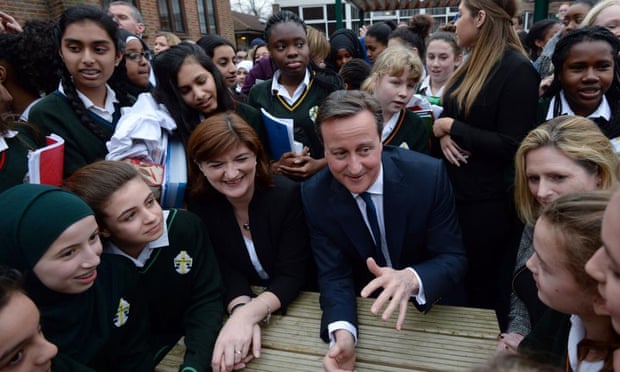
Photograph: WPA Pool/Getty Images
Education Secretary Nicky Morgan will insist that all pupils study the English Baccalaureate (EBacc) subjects up until the age of 16.  At present, only 39 per cent do - itself up from 22 per cent when the EBacc measure was first introduced in 2010 by her predecessor Michael Gove. This means that every pupil in Secondary School will have to study the five core academic subjects; English, maths, science, languages and geography or history up to GCSE level as a result of radical reforms.

This policy outlined by Nicky Morgan is set to be introduced alongside the new GCSE grading system being introduced for first teaching this September, which replaces the A to G system with a new nine-to-one numbered scale. The new grading system has been designed to reveal the differences between candidates at the top end. Currently, candidates are expected to achieve a C to attain a "good pass", although grades below this are still officially considered passes.

Teachers’ leaders will argue the plan on studying the EBacc subjects is too prescriptive - and that not every pupil is suited to such a demanding academic diet.

Christine Blower, general secretary of the National Union of Teachers, said last night that Ms Morgan had reversed the previous government policy of allowing schools to decide which pupils to put in for the EBacc “with just one speech” and “without the least consultation”.
She said the new policy would “cause dismay amongst parents”, adding: “Parents, like teachers want a broad and balanced curriculum for their children”.

However, Ms Morgan states her plans are a key element of the Government’s commitment to social justice. “We want every single person in the country to have access to the best opportunities Britain has to offer - starting with an excellent education,” she said.

In addition, she will announce the appointment of school behavioural expert Tom Bennett to draw up plans for training teachers how to tackle low-level disruption in the classroom - which, education standards watchdog Ofsted estimates, is losing pupils up to an hour of learning a day.


The inspectorate found that children were having a significant impact on the learning of others by swinging on chairs, playing on mobile phones, making silly comments to get attention and passing notes around in class.

Friday, 22 May 2015

GCSE maths papers to be changed amid concerns over difficulty


Exam boards have been ordered to change new GCSE maths papers just a few months before students are due to study them, amid concerns they are too tough.

There is a "significant risk" that assessments drawn up by three awarding bodies will be too difficult for the full range of pupils' abilities, according to research by Ofqual. Ofqual analysed the results of 4,000 mock tests of sample papers for GCSEs due to be studied in schools next term and found three of the four main exam boards had made their papers too hard for the broad spread of candidates, while the fourth, AQA, has been ordered to make its papers more "challenging". 

New maths GCSEs are scheduled to be introduced to schools and colleges from this September as part of the major education overhaul started by the previous government, to toughen up the qualifications. Former education secretary Michael Gove wanted the courses to include more challenging content, to better prepare students for studying A-levels.

As part of the research, thousands of students were asked to sit new sample maths papers. The study found average marks were very low compared with what would be expected in a real GCSE exam – even for students from the best-performing schools.

Overall, the level of difficulty in the sample papers was higher than in current GCSE papers. This is in line with the government’s demands for a more rigorous curriculum. The research found, however, that the higher-tier papers from WJEC Eduqas and Pearson were so difficult that the top grade was often no more than 50%.

"There is a significant risk that all but AQA's assessments will be too difficult for the full range of ability for the cohort for which the qualification is intended," Ofqual's report concludes. This is likely to prevent the reliable grading of students. "The additional challenge will be beneficial for the most able students but the assessments also need to support a positive experience for the rest of the cohort so as to ensure that all students become more confident and competent as mathematicians."

Monday, 18 May 2015

Schools that ban mobile phones see better academic results


Banning mobile phones from schools saves one week's worth of learning per pupil over an academic year, it has been claimed.

According to new research by Louis-Philippe Beland and Richard Murphy, published by the Centre for Economic Performance at the London School of Economics, the effect of banning mobile phones from school premises adds up to the equivalent of an extra week’s schooling over a pupil’s academic year, according to research schools which banned the devices saw their 16-year-olds' test performance improve by 6.4%.

Mobile phone usage in Schools has only become a problem within the last 15 years. In a survey conducted in 2001, no school banned mobiles. By 2007, this had risen to 50%, and by 2012 some 98% of schools had opted to restrict them. In the UK, more than 90% of teenagers own a mobile phone; in the US, just under three quarters have one. The prevalence of the devices poses problems for head teachers, whose attitude towards the technology has hardened as it has become ubiquitous.

However, some schools are starting to allow limited use of the devices. New York mayor Bill de Blasio has lifted a 10-year ban on phones on school premises, with the city’s chancellor of schools stating that it would reduce inequality.
The study was run in schools in Birmingham, London, Leicester and Manchester before and after bans.

Thursday, 30 April 2015

Should Pupils be allowed to use Google when sitting GCSE and A-level exams?

Pupils should be allowed to use Google when sitting GCSE and A-level exams to adapt to the way they learn, according to Mark Dawe, the OCR exam board chief executive.
Introducing tools like Google or calculators will help teachers assess the way students draw on information and apply it to their learning. Mark said everyone has Google available to them and students will only have a limited amount of time to conduct online searches anyway.
Speaking to the Daily Telegraph, Mr Dawe said: “Everyone has a computer available to solve a problem but it’s then about how they interpret the results. We have tools, like Google, why would you exclude those from students’ learning?"
“Surely when they learn in the classroom, everyone uses Google if there is a question. It is more about understanding what results you’re seeing rather than keeping all of that knowledge in your head because that’s not how the modern world works.”
He compared the idea of introducing Google to examinations to the old-age debate about whether to have books available during a test. He said: “In reality you didn’t have too much time [to consult the book] and you had to learn it anyway.”
Despite his enthusiasm about the introduction of technology during examinations, he said this reality was at least a decade away in the UK. He added: “It is important that parents and teachers understand and believe this is fair. The government would need to ensure they have the right regulation to ensure the quality of standards are maintained.”

Tuesday, 24 February 2015

Should maths be taught from state-approved textbooks?

Photograph: Martin Godwin/the Guardian

Is England moving closer to having pupils taught maths through “state-approved” textbooks, modelled on those used in China and Singapore? That is the fear among some attendees of a meeting earlier this month, when the DfE told education publishers it wanted to see the introduction of a “quality framework” against which maths textbooks could be assessed.
One version of what this might look like has already been devised by the government-funded National Centre for Excellence in the Teaching ofMathematics. Now, under pressure from ministers, publishing organisations are working on their own version.
The move is being driven by Nick Gibb, the traditionalist schools minister running curriculum policy, following a paper published last November by Tim Oates, head of research at the exam body Cambridge Assessment. Oates argued that the quality of England’s textbooks has declined since the 1970s. Favourably citing Singapore, where textbooks are “state-approved”, he seemed to advocate such a structure here, saying publishers would have to raise their game to fulfil government expectations of the quality of their materials.
Ministers, who have set up a network of “maths hubs” around England which are welcoming visiting teachers from China, are impressed by textbooks used in the Far East.
Publishers hope that a voluntary code will assuage Gibb, who wants English schools to match the Pacific Rim in global education league tables. But the threat of a formal government approval process for maths textbooks still also seems to be around in the background.

Tuesday, 10 February 2015

Half term: a break from the busy

With half term fast approaching, many parents and children are asking themselves the question “what should we do with the February mini-break?” Around the country during the half-term break, there are plenty of activities put on, so inspiration can be found all over. From late-night openings at the National History Museum to whizzing down a zip-wire at Go Ape, there is plenty on. But because it is a week off school, we thought it diplomatic to ask a selection of head teachers what they would ideally like their children to be doing.

If you are studying over the week off, get organised, Ros Kamaryc, headmistress of Queen’s Gate School in South Kensington, London  says “It is essential for those preparing for GCSEs and A-levels to use the February half-term holidays wisely, whilst also finding some time for rest and relaxation.”
Although many students may be pre-occupied thinking of the exams after half-term, a week off at home provides both an opportunity to build on work done so far and to step away from it to do other things.  

Click on the link below and check out 10ticks Valentines page for lots of fun maths activities and worksheets.

The Telegraph, supported by education professionals, have created a list of things you can during the February break.

The great outdoors
Some pursuits are more old-fashioned than others. Catherine Mawston, headmistress of Dodderhill School in Droitwich Spa, is all for a very Enid-Blyton-style half-term. “Have a camp fire, toast some bread, go for a bike ride or a walk in the woods,” she enthuses. “Just getting out in the fresh air is the important thing; even though it’s cold, you can still have lots of fun. This time of year is perfect for climbing trees — there are no leaves to get in the way.”

Reading
“Reading” is Warwick School headmaster Gus Lock’s first response to the question. “Ideally books that help [children] think beyond their current place and time, but any books are better than none,” he says.
Over February half-term, Warwick School opens its doors to pupils from all schools. From robotics, to squash, to kayaking, tag rugby, table tennis and stop-motion animation, Warwick has ticked almost every box for February half-term fun. “I hope that people who experience any aspect of Warwick School enjoy it,” Lock says.
Fred de Falbe, of St Richard’s School in Herefordshire, suggests a triple threat of reading for the week off: “The Hobbit is essential February reading, as is The Thirty-Nine Steps and Frank Cottrell Boyce’s Millions.”

Expanding the mind
Roedean’s Oliver Blond encourages pupils to find out something new, for learning can happen both in and out of school hours. “They should be looking for entirely unexplored land,” he explains.
“I would ask them to explore, research and read, delighting in the process of uncovering more and more about this area, whatever it might be. This is, itself, an exciting process.”

Sport
For some, the rugby sevens season is just around the corner. “I will be setting up a two-day camp for local boys to hone their skills,” Stephen Mulryne of Terrington Hall Preparatory School, near York, explains.
“This is an exciting time in their prep school lives, so we will be encouraging those of a sporty disposition to take this opportunity.”
Skiing is a popular exploit for February half-term, and the prices on travel company websites inevitably reflect this. “Many of our parents take the option to have their annual trip to the Alps during [February half-term],” Mulryne adds. “As skiing is such an active holiday, I have known children to return to school more tired than when they left for their week off!”

Bonkers fun
The supremely superior option of a traditionally bonkers project also makes ideal February half-term material. “Dismantling a redundant Hoover is a great plan,” de Falbe beams. “You don’t have to turn it back into a robot, but a good glue gun will get this going wonderfully well.” Jolly good fun, wouldn’t you say?

Blond has the final words of wisdom. “Although it is, no doubt, something that every new generation feels, it does seem to be true that life is busier for pupils these days than ever before.” That truth is the real reason for February half-term: a break from busy, and some time for calm. Enjoy.

Friday, 16 January 2015

How good is your maths, are you smarter than a nine-year-old?


Bosses behind the Government's High Speed Two project were recently given a remarkable slap down at the hands of a nine-year-old boy scout in Parliament over the projects spiraling costs.
Alex Rukin, from Kenilworth in Warwickshire, told a committee of MPs the people behind the multi-billion pound project had displayed "really really bad" maths and offered to help with the sums himself.
The young campaigner outlined an alleged £7 billion black hole in cost estimates for the rail project, adding when challenged over his own mathematical abilities: "I got 93 per cent in my last maths test."
Alex's mature appearance - he is believed to be one of the youngest people ever to address Parliament - won plaudits from MPs and spectators alike.
But could you match the youngster's mathematical ability? 

Thursday, 15 January 2015

Lego and maths: building blocks for an education?


Birchfield School in Shropshire has become the first school in the world to teach maths to five-year-olds using a programme supported by one of the best known brand names on the planet, Lego. The use of the new product of Lego Education called MoreToMaths in primary schools divides opinion among teachers but is a hit with pupils.

Primary schools have been using Lego informally for decades. But what is happening at Birchfield, an independent preparatory school is different; its pupils are using a product of Lego Education – an arm of the Danish toymaker – called MoreToMaths, which officially launches worldwide this month.

MoreToMaths had been under development for more than two years at Lego’s Billund headquarters in Denmark and in the US, before being adapted to teach mathematics as part of England’s national curriculum for five to seven year-olds, also known as key stage 1.

Emma Grant-King the Year 1 teacher at Birchfield says “It worries me that the children go home and tell their parents they’ve been playing with Lego” as she watches her young class, busy with their set maths task to solve questions using hens made from Lego bricks and counting nests of Lego eggs.

Sebastian, one of her pupils on the other hand has no such reservations. “I love it,” he says, as he and classmate Amar carefully move the white eggs between Lego nests and write answers in their worksheets. “I’ve got loads of Lego at home,” Sebastian explains with enthusiasm. “But this isn’t the same.”

However, the price of the product could pose a problem for some institutions. MoreToMaths kits for a class of 30, which include lesson plans, software and teaching guides, will cost £750

Andrew Chadwick, a maths subject leader at a primary school in Devon, doubts that the cost could be justified and that the lesson plans did not put enough emphasis on pupils becoming fluent, as required by the new national standards. “The lessons would require children spending a significant amount of time to build the Lego models – even assuming they stay on task – and so less time would be available to practise key skills and thinking about maths,”

René Lydiksen, managing director of Lego Education Europe, hopes that Birchfield School will be the first of many. “I fully understand some of the concerns, because we are owned by a toy company. However, we have our own agenda at Lego Education that is all about delivering learning impact". With its slogan of “There’s more to maths than facts,” MoreToMaths will, according to Lydiksen, allow teachers to concentrate on “the learning process”.

Tuesday, 16 December 2014

Chief Welsh exam officer calls for Maths GCSEs to be started earlier

Gareth Pierce, chief of the Welsh exam board said schools would need sufficient time to cover all the work. From September 2015 most children will study for two maths GCSEs rather than the one currently offered in schools.

Some schools already study for GCSE courses in years 8 and 9 but Mr Pierce told BBC Wales that the new double maths qualification should be a three-year course.

He said, "Without a solution of that kind there is a question of how much workload will be on pupils following the two GCSEs.”

"Although there is quite an overlap in content, the assessment styles are a bit different and there is some different content in the GCSE mathematics compared to the numeracy.”

"So I'm sure schools will be thinking very carefully about ensuring there is sufficient time to cover all of that work."

The Welsh government doesn't agree and says there will be no extra time added. 

From next year a numeracy course will assess what maths skills learners need in their everyday lives in the world of work and in other general curriculum areas.

A second mathematics qualification will extend to aspects needed for progression to scientific, technical or further mathematical study.


The new qualifications are an attempt by the Welsh government to raise standards and improve performances in maths, which is the weakest of the core GCSE subjects.

At 10ticks we have been mapping our maths resources to the new GCSE framework, and we will be adding work into year 8 and 9 to make sure teachers have enough time to cover everything in time for GCSE. 

Thursday, 11 December 2014

Education Secretary Nicky Morgan refuses to answer maths questions asked by boy, 10

The Education secretary Nicky Morgan refused to answer a simple maths questions put to her by a 10 year old boy. The question asked was “what is the cube root of 125”.

Ms Morgan was taking part in an interview on Sky news where she had agreed to be interviewed by a group of school children. Presenter Anushka Asthana asked her “How’s your maths?” Ms Morgan’s reply was “Oh, I’m not doing maths in air”

However this didn't stop young Leon Remphry asking, with Ms Morgan’s response being “I think that’s one that I might just have to go away and work out”.

“I think politicians who answer maths questions or spelling questions on air normally come a cropper”


This isn't the first time a politician has been caught in the spot light when being asked what appears to be a simple maths question, a similar situation happened to George Osborne last year. It’s not just politicians who struggle with simple maths questions though, 4 in 5 adults have a low level of numeracy – roughly defined as lower than a C at GCSE. This is a huge amount but demonstrates how quickly you can lose those maths skills once you have left school.

Wednesday, 10 December 2014

Secondary schools warned by Ofsted that progress has stalled

Secondary schools in England have been warned by Ofsted that they are not increasing standards fast enough, with almost a third of secondary schools rated as requiring improvement or inadequate.

Chief inspector Sir Michael Wilshaw, delivering the education watchdog's annual report, says that secondary schools have "stalled". He says there are now 170,000 pupils in inadequate secondary schools, about 70,000 more than two years ago and these schools "need to concentrate on the basics".

The annual report, looking at the outcomes of inspections in 2013-14, says that the school system continues to improve, with more than four out of five schools now rated good or outstanding. Much of this progress has been driven by primary schools, with Ofsted saying there are 700,000 more pupils in good and outstanding primary schools than in 2012.

But Sir Michael warns that there are more worrying signs in secondary schools, with 50 more in special measures than last year. The rate of improvement has slowed and some have declined, with 71% of secondary schools rated as good or outstanding, compared with 82% of primary schools. It means that for secondary schools, 29% are rated as requiring improvement or inadequate.

He also warned the "transition from primary to secondary can be poor" and the "culture of underperforming schools is not good, with low-level disruption".

The Ofsted chief said more school autonomy needed to be accompanied by increased monitoring. He said that was one of the lessons of the so-called Trojan horse investigation in Birmingham, where schools rated outstanding were downgraded to inadequate.

In presenting the report, Sir Michael said he was also "increasingly concerned" about problems with recruiting teachers, particularly when there was a population surge. "This is a pressing issue. More teachers will be needed to match the substantial increase in the number of school-aged children expected over the next 10 years." If there were not enough teachers, he warned that the best schools would "cherry pick the best trainees", with the risk that this would widen the gap between strong and weak schools.

Education Secretary Nicky Morgan said "One of my tasks is going to be to make sure we see great leadership across the school system.”

"We have many excellent head teachers and now we want to see more of them working with schools that need the next boost to make sure that they are not failing their pupils."


Labour's shadow education secretary Tristram Hunt said, "Whilst we have plenty of reasons to celebrate success in our school system, we can see stagnation across secondary school performance. The way to address this is equally clear: by raising the quality of teaching in every classroom, in every school."

Tuesday, 9 December 2014

Students to learn about mortgages in ‘real life’ maths course

Sixth formers will learn how to calculate a mortgage, run a business and play the stock markets under plans for a new sixth-form qualification in ‘real life’ maths, it has been announced.

Up to 230,000 students in England could take the core maths course when it is introduced from September 2015 as part of a drive to stop students dropping maths altogether at the age of 16.

The two-year qualification will be worth half an A-Level and will count towards higher education admissions – encouraging students to take the exam to secure university places.

The maths course has been designed to build on concepts already covered in GCSE maths but will be less demanding than the full A-Level.

Subjects covered as part of the qualification include:

  • Using different data sources to determine changes to average house prices over the course of a year and calculating the value of a mortgage loan.


  •          Developing an advanced understanding of statistics, financial maths and modelling, including understanding investments and analysing trends in popular growth.


  •          Using maths in business settings, with pupils asked to calculate costs, estimate demand and set a selling price for products to maximise profits.


  •          Learning about the impact that income tax rates and National Insurance contributions have on family finances.


  •          An introduction to foreign exchange rates, with pupils calculating loss in pounds as a percentage of the original amount paid to the cashier for the euros should they sell them back.


Nick Gibb, the schools minister said. “England has been falling behind other countries’ maths performance, which is why we have launched a new maths curriculum to match the best in the world and are introducing rigorous new GCSE and A-Level maths qualifications.”

“Only one fifth of pupils in England continue to study maths at any level after achieving a GCSE – the lowest of 24 developed countries.”

“These new core maths qualifications will help address a 16 to 18 ‘maths gap’ whereby students who achieve a good maths grade at GCSE currently drop the subject and start to lose their confidence and skills”


From 10ticks point of view this is good news, as the longer a student is taught maths the more they will benefit later in life. Learning real life math situations will also help to keep students engaged with maths, as they will see real benefits to the course and won’t be able to use the age old excuse of “when am I ever going to use this in real life” and switch off.

Monday, 8 December 2014

Maths and Science teaching a priority, says Cameron

David Cameron announced the opening of a National College of Digital Skills in London in 2015, to enhance economic competitiveness in the global race.

There will be specialist training to improve the skills of 17,500 maths and science teachers.

However, Labour says the government has already failed to meet its teacher recruitment targets. They warned that the government’s teacher training policy was already leading to shortages. The Association of school and College leaders also warned recently that schools would have to recruit from overseas to fill vacancies, including maths and science teachers. They said “Shortfalls in the recruitment of maths and physics teachers are especially concerning”

Mr Cameron argues that maths, science and technology are the key skills for a modern globalised economy.

“There’s no secret to success in the modern world. If countries are going to win the global race and children compete and get the best jobs, you need mathematicians and scientists – pure and simple”
“So today, we commit to deliver more maths and science teachers”

“This is all part of our long-term economic plan for Britain – making sure our children have the right skills they need to thrive and get on”

The Prime minister announced the extra training as pupils visited Downing Street for a lesson in computer coding, as part of the international Hour of Code project.

“It will take time but it’s absolutely vital for the success of our country that we teach maths and science and computing in a modern way, because that will be one of the things that will determine whether we succeed or not” said Mr Cameron.

A £67 million initiative, covering the next five years, will give extra maths and science training for 15,000 existing teacher and recruit an additional 2,500 teachers.


Improving maths skills will benefit the competitiveness of the economy and improve job chances of individuals, said the Prime Minister.

Wednesday, 3 December 2014

New A-Level Maths to be delayed by a year

The introduction of new maths AS and A-Levels will be delayed by a year until September 2017, the government says.

The delay has come about due to fears students would struggle to bridge the gap between the current GCSE and new A-Levels. Nick Gibb the School Minister said the delay would give students the benefit of having studied the new GCSE maths syllabus which starts next year.

This will be welcome news to teachers, who have argued against the rushed implementation of the new A-Level Curriculum all along. The head of the teachers’ union ASCL said the decision was logical but should have been made “in the first instance”.

Exams regulator Ofqual and A-Level Content Advisory Board (Alcab), advised that the current GCSE maths and A-Level maths would not line up in terms of content.

National Association of Head Teachers’ general secretary Russell Hobby particularly welcomed this aspect of the deferment.

“It takes a long time for schools to prepare for a new exam properly. This includes changes to teaching programmes, resources and even staffing.” Said Mr Hobby

The new A-Level Maths Curriculum contain substantial changes in emphasis and content, with a  much bigger focus on making sure students embrace fluency, reasoning and mathematical problem-solving.


With teachers and students already having to adapt to a new maths Curriculum from Years 7 to 11 in Secondary schools, this will help relieve some of the pressure on teachers and allow them time to adapt. 

Thursday, 20 November 2014

Secondary Schools set to increase amount of maths teaching time

According to a recent survey, more than a quarter of schools are planning to increase the amount of time spent teaching maths next year. This will be in time for the new Maths GCSE set to come in next September. Half of schools have said they will introduce new training programmes for staff and a third of schools are going to recruit more maths teachers.

The survey finds that 28 per cent of secondary schools plan to increase teaching time for maths by up to one hour at key stage 4, while 27 per cent aim to do so at key stage 3. Half of secondary leaders say they will introduce a programme of professional development for maths teachers and 36 per cent say they will recruit additional staff.

The findings were carried out by the National Foundation for Educational Research for the department of education, who surveyed school leaders and teachers.

Reforms to the maths Curriculum aim to make it more challenging, with a greater emphasis on problem-solving. The syllabus has been expanded by a third, with new topics including ratio and proportion. Students will be required to tackle financial mathematics and learn mathematical formulas by heart.

School reform minister Nick Gibb said he welcomed the news that teachers were responding to the new course by increasing the amount of time spent on maths. “Our plan for education is ensuring more pupils will benefit from an increased focus on maths and other key academic subjects,” he added.


The survey finds that half of schools are planning to retain existing systems for assessing students’ progress in the new national curriculum, introduced this September, while 23 per cent say they are going to use a new system developed by their school or group of schools. A further 19 per cent are undecided.