Wednesday, 17 June 2015

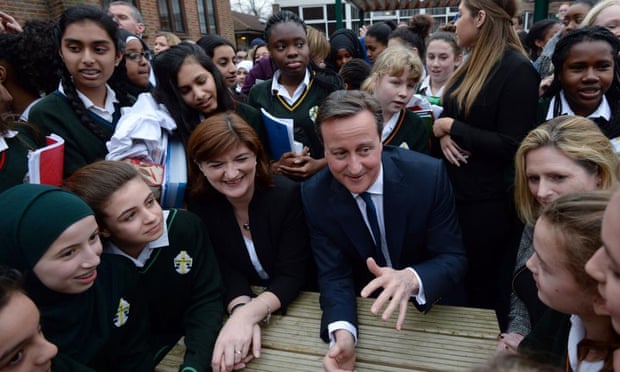
Further GCSE Reforms to be Introduced to "set every child up for life"


Photograph: WPA Pool/Getty Images
Education Secretary Nicky Morgan will insist that all pupils study the English Baccalaureate (EBacc) subjects up until the age of 16.  At present, only 39 per cent do - itself up from 22 per cent when the EBacc measure was first introduced in 2010 by her predecessor Michael Gove. This means that every pupil in Secondary School will have to study the five core academic subjects; English, maths, science, languages and geography or history up to GCSE level as a result of radical reforms.

This policy outlined by Nicky Morgan is set to be introduced alongside the new GCSE grading system being introduced for first teaching this September, which replaces the A to G system with a new nine-to-one numbered scale. The new grading system has been designed to reveal the differences between candidates at the top end. Currently, candidates are expected to achieve a C to attain a "good pass", although grades below this are still officially considered passes.

Teachers’ leaders will argue the plan on studying the EBacc subjects is too prescriptive - and that not every pupil is suited to such a demanding academic diet.

Christine Blower, general secretary of the National Union of Teachers, said last night that Ms Morgan had reversed the previous government policy of allowing schools to decide which pupils to put in for the EBacc “with just one speech” and “without the least consultation”.
She said the new policy would “cause dismay amongst parents”, adding: “Parents, like teachers want a broad and balanced curriculum for their children”.

However, Ms Morgan states her plans are a key element of the Government’s commitment to social justice. “We want every single person in the country to have access to the best opportunities Britain has to offer - starting with an excellent education,” she said.

In addition, she will announce the appointment of school behavioural expert Tom Bennett to draw up plans for training teachers how to tackle low-level disruption in the classroom - which, education standards watchdog Ofsted estimates, is losing pupils up to an hour of learning a day.


The inspectorate found that children were having a significant impact on the learning of others by swinging on chairs, playing on mobile phones, making silly comments to get attention and passing notes around in class.

Friday, 22 May 2015

GCSE maths papers to be changed amid concerns over difficulty


Exam boards have been ordered to change new GCSE maths papers just a few months before students are due to study them, amid concerns they are too tough.

There is a "significant risk" that assessments drawn up by three awarding bodies will be too difficult for the full range of pupils' abilities, according to research by Ofqual. Ofqual analysed the results of 4,000 mock tests of sample papers for GCSEs due to be studied in schools next term and found three of the four main exam boards had made their papers too hard for the broad spread of candidates, while the fourth, AQA, has been ordered to make its papers more "challenging". 

New maths GCSEs are scheduled to be introduced to schools and colleges from this September as part of the major education overhaul started by the previous government, to toughen up the qualifications. Former education secretary Michael Gove wanted the courses to include more challenging content, to better prepare students for studying A-levels.

As part of the research, thousands of students were asked to sit new sample maths papers. The study found average marks were very low compared with what would be expected in a real GCSE exam – even for students from the best-performing schools.

Overall, the level of difficulty in the sample papers was higher than in current GCSE papers. This is in line with the government’s demands for a more rigorous curriculum. The research found, however, that the higher-tier papers from WJEC Eduqas and Pearson were so difficult that the top grade was often no more than 50%.

"There is a significant risk that all but AQA's assessments will be too difficult for the full range of ability for the cohort for which the qualification is intended," Ofqual's report concludes. This is likely to prevent the reliable grading of students. "The additional challenge will be beneficial for the most able students but the assessments also need to support a positive experience for the rest of the cohort so as to ensure that all students become more confident and competent as mathematicians."

Monday, 18 May 2015

Schools that ban mobile phones see better academic results


Banning mobile phones from schools saves one week's worth of learning per pupil over an academic year, it has been claimed.

According to new research by Louis-Philippe Beland and Richard Murphy, published by the Centre for Economic Performance at the London School of Economics, the effect of banning mobile phones from school premises adds up to the equivalent of an extra week’s schooling over a pupil’s academic year, according to research schools which banned the devices saw their 16-year-olds' test performance improve by 6.4%.

Mobile phone usage in Schools has only become a problem within the last 15 years. In a survey conducted in 2001, no school banned mobiles. By 2007, this had risen to 50%, and by 2012 some 98% of schools had opted to restrict them. In the UK, more than 90% of teenagers own a mobile phone; in the US, just under three quarters have one. The prevalence of the devices poses problems for head teachers, whose attitude towards the technology has hardened as it has become ubiquitous.

However, some schools are starting to allow limited use of the devices. New York mayor Bill de Blasio has lifted a 10-year ban on phones on school premises, with the city’s chancellor of schools stating that it would reduce inequality.
The study was run in schools in Birmingham, London, Leicester and Manchester before and after bans.

Thursday, 30 April 2015

Should Pupils be allowed to use Google when sitting GCSE and A-level exams?

Pupils should be allowed to use Google when sitting GCSE and A-level exams to adapt to the way they learn, according to Mark Dawe, the OCR exam board chief executive.
Introducing tools like Google or calculators will help teachers assess the way students draw on information and apply it to their learning. Mark said everyone has Google available to them and students will only have a limited amount of time to conduct online searches anyway.
Speaking to the Daily Telegraph, Mr Dawe said: “Everyone has a computer available to solve a problem but it’s then about how they interpret the results. We have tools, like Google, why would you exclude those from students’ learning?"
“Surely when they learn in the classroom, everyone uses Google if there is a question. It is more about understanding what results you’re seeing rather than keeping all of that knowledge in your head because that’s not how the modern world works.”
He compared the idea of introducing Google to examinations to the old-age debate about whether to have books available during a test. He said: “In reality you didn’t have too much time [to consult the book] and you had to learn it anyway.”
Despite his enthusiasm about the introduction of technology during examinations, he said this reality was at least a decade away in the UK. He added: “It is important that parents and teachers understand and believe this is fair. The government would need to ensure they have the right regulation to ensure the quality of standards are maintained.”

Thursday, 19 March 2015

Survey finds that parents 'rely on phone calculators' to help children with maths homework.


According to a ComRes poll (commissioned by TeachFirst and Barclays) of 1,000 Parents who took part across the UK, nearly two in five of them rely on phone calculators or Google searches when helping their child with maths and science because they don't know enough about the subjects themselves. Whilst a third of parents also said that they feel anxious when helping out with their child's maths or science homework. 
The parents said they tended to use technology when working out sums because they did not feel confident about their knowledge of maths and science based on their own schooling experience, the poll revealed. Some parents also carry out research online without their child knowing because they are too embarrassed to admit they don't know everything.
In a separate study published last year, maths was identified by the highest proportion of parents as the hardest subject to help their child with. 34 per cent said maths was the hardest, while only 8 per cent said it was English.
Sissy Pambu, a 36-year-old mother of two pupils aged nine and 13, said that, in the past, she’s gone to great lengths to conceal her lack of knowledge of maths and science.
Ms Pambu said: “I tried to work out my daughter’s math problems on my own while she was sleeping because I didn’t want her to see me. I went online or used a pen and paper to try to work out stuff like fractions, decimals and how to multiply and divide.
“I felt embarrassed because, as parents, we feel like we should know everything.”
The survey follows an announcement from David Cameron, the Prime Minister, earlier this month, in which he launched a new £15,000 university bursary for students with good grades in physics and maths.
The bursary is intended to help pupils with the costs of studying at university and comes with the proviso that they agree to become schoolteachers for at least three years following graduation.
(Full Article:http://www.telegraph.co.uk/education/educationnews/11481062/Parents-rely-on-phone-calculators-to-help-children-with-maths-survey-finds.html) 

Tuesday, 24 February 2015

Should maths be taught from state-approved textbooks?

Photograph: Martin Godwin/the Guardian

Is England moving closer to having pupils taught maths through “state-approved” textbooks, modelled on those used in China and Singapore? That is the fear among some attendees of a meeting earlier this month, when the DfE told education publishers it wanted to see the introduction of a “quality framework” against which maths textbooks could be assessed.
One version of what this might look like has already been devised by the government-funded National Centre for Excellence in the Teaching ofMathematics. Now, under pressure from ministers, publishing organisations are working on their own version.
The move is being driven by Nick Gibb, the traditionalist schools minister running curriculum policy, following a paper published last November by Tim Oates, head of research at the exam body Cambridge Assessment. Oates argued that the quality of England’s textbooks has declined since the 1970s. Favourably citing Singapore, where textbooks are “state-approved”, he seemed to advocate such a structure here, saying publishers would have to raise their game to fulfil government expectations of the quality of their materials.
Ministers, who have set up a network of “maths hubs” around England which are welcoming visiting teachers from China, are impressed by textbooks used in the Far East.
Publishers hope that a voluntary code will assuage Gibb, who wants English schools to match the Pacific Rim in global education league tables. But the threat of a formal government approval process for maths textbooks still also seems to be around in the background.

Tuesday, 10 February 2015

Half term: a break from the busy

With half term fast approaching, many parents and children are asking themselves the question “what should we do with the February mini-break?” Around the country during the half-term break, there are plenty of activities put on, so inspiration can be found all over. From late-night openings at the National History Museum to whizzing down a zip-wire at Go Ape, there is plenty on. But because it is a week off school, we thought it diplomatic to ask a selection of head teachers what they would ideally like their children to be doing.

If you are studying over the week off, get organised, Ros Kamaryc, headmistress of Queen’s Gate School in South Kensington, London  says “It is essential for those preparing for GCSEs and A-levels to use the February half-term holidays wisely, whilst also finding some time for rest and relaxation.”
Although many students may be pre-occupied thinking of the exams after half-term, a week off at home provides both an opportunity to build on work done so far and to step away from it to do other things.  

Click on the link below and check out 10ticks Valentines page for lots of fun maths activities and worksheets.

The Telegraph, supported by education professionals, have created a list of things you can during the February break.

The great outdoors
Some pursuits are more old-fashioned than others. Catherine Mawston, headmistress of Dodderhill School in Droitwich Spa, is all for a very Enid-Blyton-style half-term. “Have a camp fire, toast some bread, go for a bike ride or a walk in the woods,” she enthuses. “Just getting out in the fresh air is the important thing; even though it’s cold, you can still have lots of fun. This time of year is perfect for climbing trees — there are no leaves to get in the way.”

Reading
“Reading” is Warwick School headmaster Gus Lock’s first response to the question. “Ideally books that help [children] think beyond their current place and time, but any books are better than none,” he says.
Over February half-term, Warwick School opens its doors to pupils from all schools. From robotics, to squash, to kayaking, tag rugby, table tennis and stop-motion animation, Warwick has ticked almost every box for February half-term fun. “I hope that people who experience any aspect of Warwick School enjoy it,” Lock says.
Fred de Falbe, of St Richard’s School in Herefordshire, suggests a triple threat of reading for the week off: “The Hobbit is essential February reading, as is The Thirty-Nine Steps and Frank Cottrell Boyce’s Millions.”

Expanding the mind
Roedean’s Oliver Blond encourages pupils to find out something new, for learning can happen both in and out of school hours. “They should be looking for entirely unexplored land,” he explains.
“I would ask them to explore, research and read, delighting in the process of uncovering more and more about this area, whatever it might be. This is, itself, an exciting process.”

Sport
For some, the rugby sevens season is just around the corner. “I will be setting up a two-day camp for local boys to hone their skills,” Stephen Mulryne of Terrington Hall Preparatory School, near York, explains.
“This is an exciting time in their prep school lives, so we will be encouraging those of a sporty disposition to take this opportunity.”
Skiing is a popular exploit for February half-term, and the prices on travel company websites inevitably reflect this. “Many of our parents take the option to have their annual trip to the Alps during [February half-term],” Mulryne adds. “As skiing is such an active holiday, I have known children to return to school more tired than when they left for their week off!”

Bonkers fun
The supremely superior option of a traditionally bonkers project also makes ideal February half-term material. “Dismantling a redundant Hoover is a great plan,” de Falbe beams. “You don’t have to turn it back into a robot, but a good glue gun will get this going wonderfully well.” Jolly good fun, wouldn’t you say?

Blond has the final words of wisdom. “Although it is, no doubt, something that every new generation feels, it does seem to be true that life is busier for pupils these days than ever before.” That truth is the real reason for February half-term: a break from busy, and some time for calm. Enjoy.